
Creatine for Women: What It Is, How It Works + What to Know
Creatine seems to be everywhere lately, and I think there’s still a lot of confusion around what it actually is.
For a long time, most of us probably associated creatine with bodybuilders or people trying to put on a lot of muscle. But creatine isn’t just a “bodybuilding supplement,” and that’s why I think it’s worth understanding a little better.
So why are more people talking about it now, especially for women?
Let’s break it down.
First, what is creatine?
Creatine is a substance your body naturally makes and stores mostly in your muscles. You can also get creatine from foods like meat and fish, although supplements provide a much larger amount than most people get from food alone.
Its main job is to help your body make quick energy.
So when you’re lifting weights, climbing stairs, sprinting, or doing anything that requires a short burst of effort, creatine helps your muscles keep up with that demand.
That’s also why creatine has been studied so much in exercise and strength research.
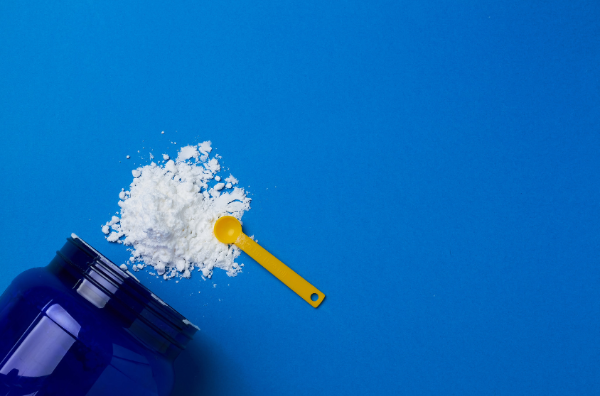
What does creatine actually do?
Once creatine is stored in your muscles, it helps your body quickly replenish ATP, which is basically the energy your cells use to do work.
That matters most during short bursts of effort, like lifting weights, sprinting, climbing stairs, getting up off the floor, or carrying something heavy.
That’s one reason creatine has been studied so much for strength, power, and exercise performance.
Why are we talking about creatine for women?
This is where I think the conversation gets interesting.
We’re learning more about how important maintaining muscle is as we age, and I’m not just talking about muscle for appearance.
Muscle helps us carry groceries, lift a suitcase, get off the floor, climb stairs, hike, travel, and continue doing the things we enjoy.
Women also go through hormonal changes throughout life that can affect muscle mass, strength, and recovery. Researchers are continuing to study creatine in women, including during and after menopause, to better understand whether it may help support muscle and physical function.
I want to be clear here: creatine isn’t a magic menopause supplement. It also doesn’t replace strength training, adequate protein, sleep, recovery, or eating enough.
It’s simply one tool that may be worth learning about.
Will creatine make you bulky?
This is probably one of the first questions people have.
Creatine itself isn’t going to suddenly make you bulky. Building significant muscle takes consistent strength training, enough food, recovery, time, and genetics.
Creatine may help support your training, but it doesn’t automatically create large muscles.
And I think this is also a good place to change the way we think about muscle a little. Building and maintaining muscle isn’t something women need to be afraid of. Muscle helps us stay strong and capable as we get older.
What about weight gain?
This is another thing you may hear about.
When you first start taking creatine, the scale may increase a little because creatine helps pull water into the muscle.
That is different from gaining body fat.
It’s also another reminder that the number on the scale doesn’t always tell us what is actually happening in our bodies.
What about brain health?
This part surprised me when I first started learning more about creatine.
Our brains use a lot of energy too, and creatine also plays a role in energy production in the brain. Researchers are looking at its possible connection to things like cognition, mental fatigue, and brain health.
There’s still more to learn here, so I wouldn’t make big promises about creatine and brain health. But I do think it’s interesting that something we once thought of mostly as a gym supplement is being studied for much more than exercise performance.
What kind should you look for?
If you start looking at creatine supplements, you’ll quickly find all kinds of versions, including creatine HCl, buffered creatine, blends, and “advanced” formulas.
This is one of those times when I think simpler is better.
Creatine monohydrate is the form that has been studied the most, and it’s what I would look for first.
I also like to flip the container over and check the ingredient list. Ideally, I’m looking for a pretty simple product with creatine monohydrate as the main ingredient, around 3–5 grams per serving, minimal fillers or added ingredients, and third-party testing when possible.
This is one supplement that really doesn’t need to be exciting.
How much do people usually take?
A common daily amount used in research and practice is around 3–5 grams of creatine monohydrate per day.
You may also hear about “loading,” where someone takes a higher amount for several days when first starting. That can increase muscle creatine stores faster, but it isn’t necessary.
Taking a smaller amount consistently can get you there too; it just takes a little longer.
And when it comes to timing, you probably don’t need to overthink that either. For most people, consistently taking it matters more than whether you take it before or after a workout.
Is creatine safe?
Creatine has been studied for decades and is generally considered safe for healthy adults when taken in recommended amounts.
But that does not mean every supplement is right for every person.
Before starting creatine, or any new supplement, talk with your healthcare provider, especially if you have kidney problems or another medical condition, take medications, or are pregnant or breastfeeding.
Your health history matters, and a blog post can’t replace individualized medical guidance.
So, do you need creatine?
No. Creatine isn’t something everyone has to take.
You can absolutely build muscle, get stronger, and support healthy aging without taking it.
But I do think it’s worth understanding what creatine actually is before automatically assuming it’s only for bodybuilders or assuming everyone needs to be taking it because it’s popular right now.
For some people, it may be a helpful tool alongside strength training, adequate protein, good nutrition, sleep, and recovery.
For others, it may not be something they need or want at all.
And that’s okay too.
For me, the bigger conversation is still about staying strong and capable for as long as we can. Supplements may have a place in that conversation, but they’re never the whole picture. 💚
Have you tried creatine, or is it one of those supplements you’ve been curious about?
